
While many people have watched it as a holiday tradition, critics have deemed one scene from A Charlie Brown Thanksgiving as being “racist.”
Videos by Suggest
In the Peanuts special, a Black character, Franklin, sits alone on one side of the table. All the other characters are placed around the different sides. Franklin is notably seen sitting in a picnic chair while the other characters are in more proper chairs.
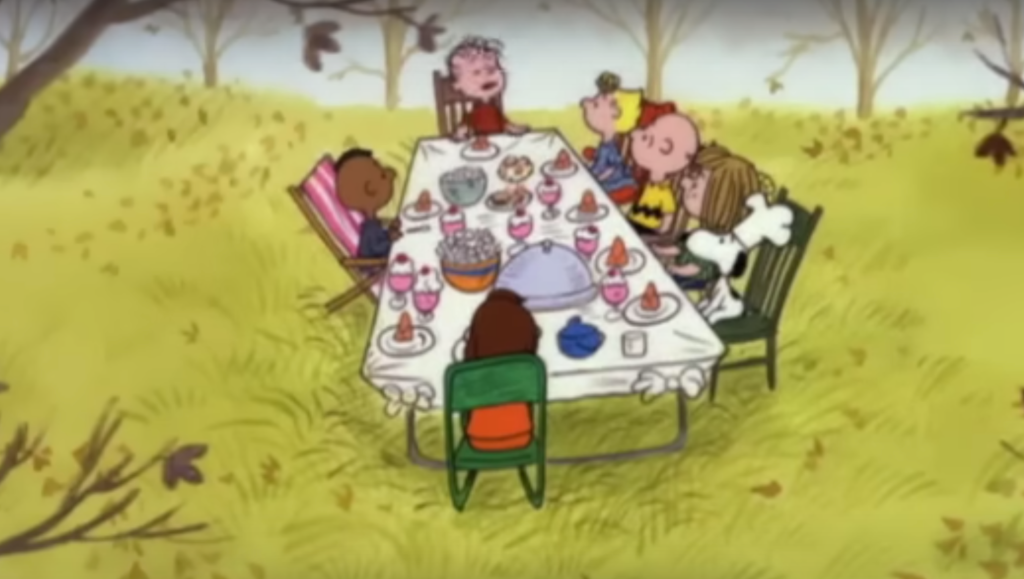
The A Charlie Brown Thanksgiving animators have been called “racist” over the years because of the scene.
In a 2020 interview with Yahoo! Entertainment, Jean Schulz, the wife of Peanuts creator Charles Schulz, stated he had written the script for this special. However, he did not participate in the animation process.
“The scene would not have had nothing to do with Sparky (Charles Schulz),” she explained. “Because it was purely the animators and the directors working on it. The director parcels out the scenes to the animators, and the animators who drew that scene aren’t alive anymore, or we don’t know how to find them.”
She further shared, “The [controversy] first popped up a couple of years ago. I’ve probably watched the special a dozen times, and I hadn’t noticed it. But I wouldn’t notice it: It’s to be noticed now.”
Charles Schulz’s Wife Shared Her Thoughts About the A Charlie Brown Thanksgiving Controversy in a Blog Post
In 2019, Jean Schulz spoke out about the controversy surrounding the A Charlie Thanksgiving scene in a blog post.
“While it can’t be known now which animator drew that particular scene, you can be sure there was no ulterior motive,” she explained. “Sparky created Franklin’s character out of sincerity with the intention of inclusiveness.”
Jean also reflected on the TV special’s message. “I fall back on Peppermint Patty’s apology to Charlie Brown, explaining she meant no harm when she criticized his poor Thanksgiving offering, which goes something like: ‘There are enough problems in the world already without these misunderstandings.’”
She then added, “To suggest the show had any other messages than the importance of family, sharing, and gratitude is to look for an issue where there is none.”