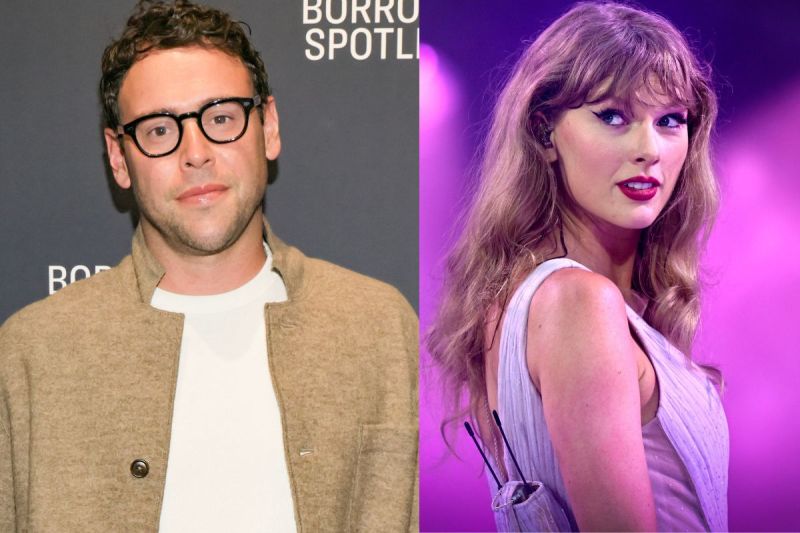
Nearly seven years after his feud with Taylor Swift began, Scooter Braun is now reflecting on how everything went down.
Videos by Suggest
During his recent appearance on the Second Thought With Suzy Weiss podcast, Braun discussed his public fallout with Swift. He accused the pop star of turning him into “a villain” after her first six studio albums were acquired by his company, Big Machine Records, for $300 million.
“[I] went from being like, loved and appreciated for over a decade to literally a villain the next night,” he explained. “I don’t want to go into that, but I will say something that will really sum it up that I don’t know if I’ve ever really said: I don’t know Taylor Swift.”
Braun noted that he has only met Swift “three times” in his life. “I have never had a substantial conversation with her in my life. I one time got invited to a private party by her. She told me she had the utmost respect for me. You don’t spend $300 million buying a label that she’s on unless you’re excited at the opportunity to work with her. I told her I had the most respect for her.”
He further noted that he will “never truly understand” the situation with Swift.
“To this day, I wish her nothing but the best,” Braun pointed out. “I learned a tremendous amount from it. I chose to grow from it. I’m grateful for it at this point in my life. But I think there’s this big misconception that, like, we knew each other, and we had this feud, and I managed her for years. And people are usually shocked to find out that I legitimately don’t know her and didn’t have many interactions with her and never really knew her.”
Braun Also Explained the $300 Million Acquisition
Meanwhile, Braun spoke about the $300 million acquisition that made Swift angry with him.
“Labels make bets on artists, and they own the masters and the artists own their publishing,” he explained. “Artists end up selling their publishing whether they need the money or decide they want to sell, and the labels are very, very well-funded so they don’t have to transact the masters.
He further noted, “The majority, to this day, of masters are still owned by labels. As confusing as [the situation was] to me, I think what it did bring to light is that artists are going to start wanting to own their masters, and I think you’re seeing artists more and more do that, and I think that’s great.”
Despite the circumstances, Swift was able to regain control of her original master recordings. She purchased them from a new owner. This was after the albums were previously sold to a private equity firm.