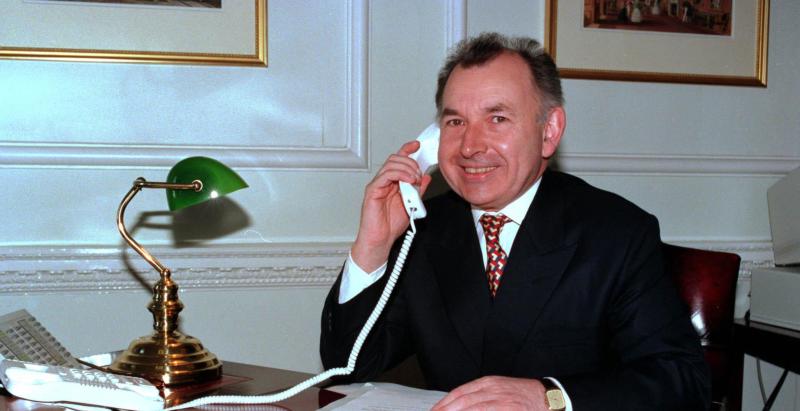
Lord John Horam, the veteran British politician who served as a minister in both Labour and Conservative governments and represented three political parties during his parliamentary career, has died at the age of 87.
Videos by Suggest
His family announced that he died at St Mary’s Hospital in Paddington after suffering what was described as “an accidental fall returning home” from a day of work at the House of Lords. He never regained consciousness after the incident, which occurred on 2 July.
In a statement, his stepson, MP Lincoln Jopp, thanked the paramedics, police officers, and hospital staff who cared for Lord Horam following the accident.
Born in Preston, Lancashire, on 7 March 1939, John Horam studied economics at St Catharine’s College, Cambridge.
He began his professional career with Rowntree’s, where he contributed to the development of the After Eight mint, before moving into journalism with the Financial Times and The Economist. He later left journalism to pursue a career in politics.
Lord John Horam Served Both Labour And Conservatives
Horam entered Parliament in 1970 as the Labour MP for Gateshead West. He became Parliamentary Under-Secretary of State for Transport in James Callaghan’s government in 1976. In 1981, dissatisfied with Labour’s direction, he joined the newly formed Social Democratic Party.
After joining the Conservative Party in 1987, he returned to the House of Commons in 1992 as MP for Orpington and later served as a minister in John Major’s government. His ministerial service in both Labour and Conservative administrations made him a rare figure in modern British politics.
After standing down from the Commons in 2010, Horam continued his public service. He joined the Electoral Commission before receiving a life peerage in 2013 as Baron Horam of Grimsargh. In the House of Lords, he advocated for increased housing supply, higher income tax thresholds, vocational training and apprenticeships.
Throughout a parliamentary career that lasted more than five decades, Lord Horam earned recognition for his independence and willingness to cross political divides. He leaves behind a distinctive legacy as one of Britain’s most unusual and experienced parliamentarians.