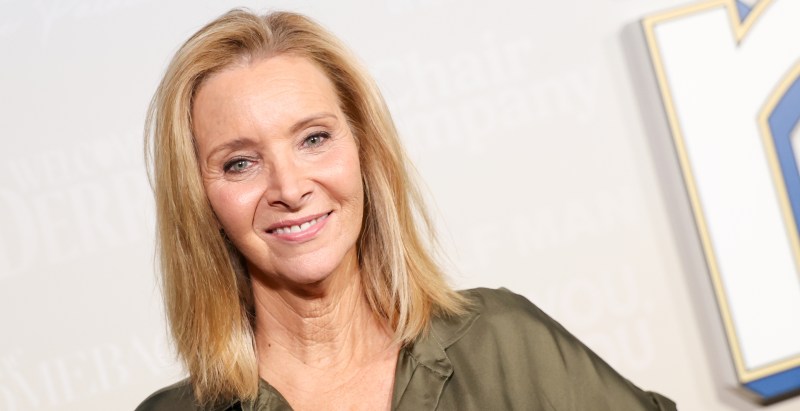
Lisa Kudrow has revealed that a casting executive once told her she was not “pretty enough” to become a regular on Friends before she landed the role that made her famous.
Videos by Suggest
Kudrow, who played Phoebe Buffay throughout the sitcom’s 10-season run, recalled the experience in an interview with The Hollywood Reporter while discussing her career and the pressures actresses faced in Hollywood.
The actress had already worked in television before Friends, including an appearance on Mad About You. She played Ursula Buffay, a waitress on the sitcom, before producers developed the character of Phoebe as her twin sister on Friends.
Lisa Kudrow Told She Wasn’t “Gorgeous”
Kudrow recalled the moment, saying, “I didn’t look like women who were getting cast as series regulars on sitcoms.”
“They still wanted a certain look — very pretty and appealing and all of that — and not that funny, right, except for Shelley Long,” she continued. “I was told, ‘It’s very hard because you’re not gorgeous, and they want gorgeous.’”
“And I’m like, ‘Okay’… I don’t think that’s ridiculous. I got it. Also, it’s not just how you look; it’s how you act, too. I’m not ‘cute.’ And God, I didn’t want to be cute.”
Kudrow ultimately turned the criticism into an unlikely contrast with the success she achieved as Phoebe, one of Friends’ six central characters.
Phoebe became a defining role for Kudrow and earned her an Emmy Award for Outstanding Supporting Actress in a Comedy Series in 1998. The character also helped establish Kudrow as one of the show’s most recognizable stars.
Friends premiered in 1994 and ran for 10 seasons, following six friends as they navigated relationships, careers and life in New York City. Kudrow starred alongside Jennifer Aniston, Courteney Cox, Matt LeBlanc, Matthew Perry and David Schwimmer.
The series became one of television’s biggest comedies and continued to attract audiences long after its original finale in 2004. Kudrow’s performance as Phoebe became particularly memorable for the character’s eccentric personality, unconventional worldview and musical performances.