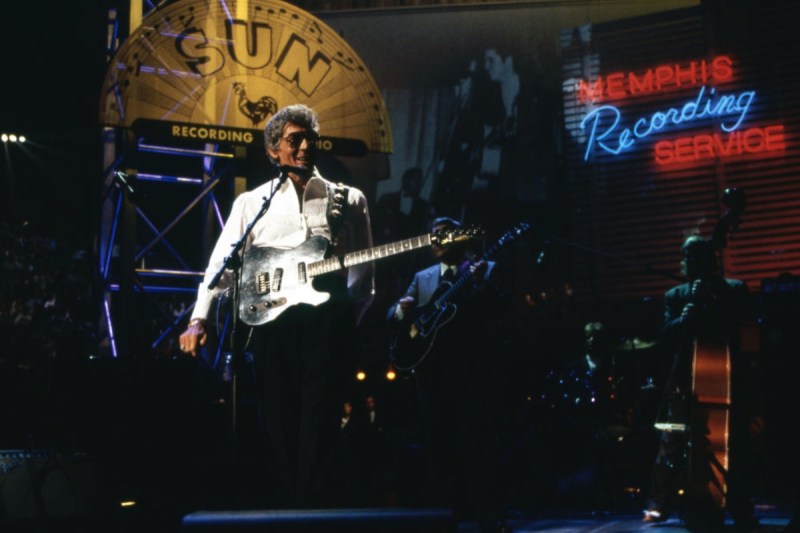
Rockabilly king Carl Perkins officially hung up his blue suede shoes on this day in 1998, leaving behind a legacy that paved the way for rock ‘n’ roll history.
Videos by Suggest
Perkins, who wrote the original “Blue Suede Shoes” and sold two million copies before Elvis Presley recorded his famous version, died from complications following three strokes in late 1997, according to Rolling Stone.
Perkins grew up poor in a sharecropping family, picking cotton in the fields around Tiptonville, Tennessee. He started working at age six, where he first heard gospel music. At night, he listened to country and Delta blues on the family radio. An older, Black field hand taught him to play the guitar, and by age 10, Perkins was entertaining his classmates. He made his radio debut with his school band, singing “Home on the Range,” according to the Sun Records website.
He began his musical career in the mid-1940s, performing at local dances with his brothers, Jay and Clayton, as the Perkins Brothers Band. In 1953, drummer W.S. “Fluke” Holland joined the group. After hearing Elvis Presley on the radio in 1954, Perkins realized his music could fit at Sun Records in Memphis. Four months later, he released his first single.
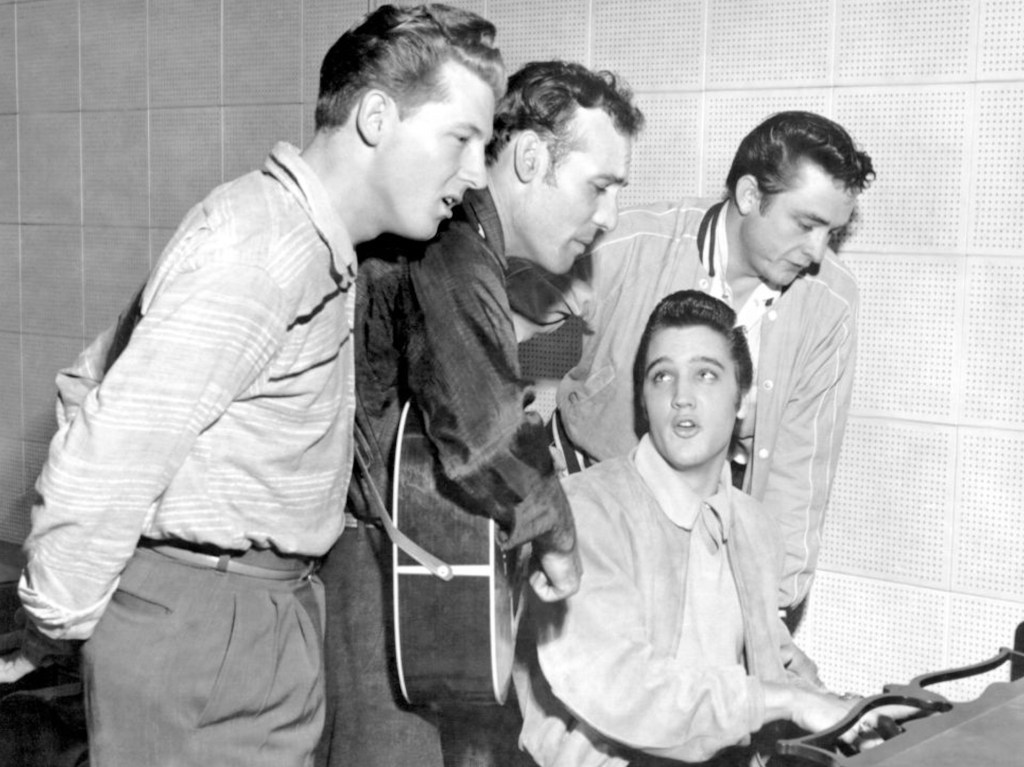
Tragedy struck at the peak of Perkins’ career. While traveling to New York for a television appearance on the Perry Como show, their driver fell asleep and crashed into a truck before plunging into the water. The driver was killed. Carl and his brother Jay both sustained serious injuries.
Perkins returned to touring within a month, but Jay never fully recovered. He was later diagnosed with a brain tumor and died in 1958.
Carl Perkins Discovers a Legendary 60’s Rock Group Are His Fans
In 1958, Perkins joined Columbia Records, recording a few minor rockabilly hits. By the early ’60s, his career had slowed, but during a 1964 British tour, he discovered the Beatles were fans. George Harrison had even learned guitar by copying Perkins’ records. Perkins became friends with the band and oversaw sessions where they covered five of his songs, including “Matchbox” and “Blue Suede Shoes.”
His music was also recorded by artists like Rick Nelson, Johnny Burnette, and Patsy Cline.
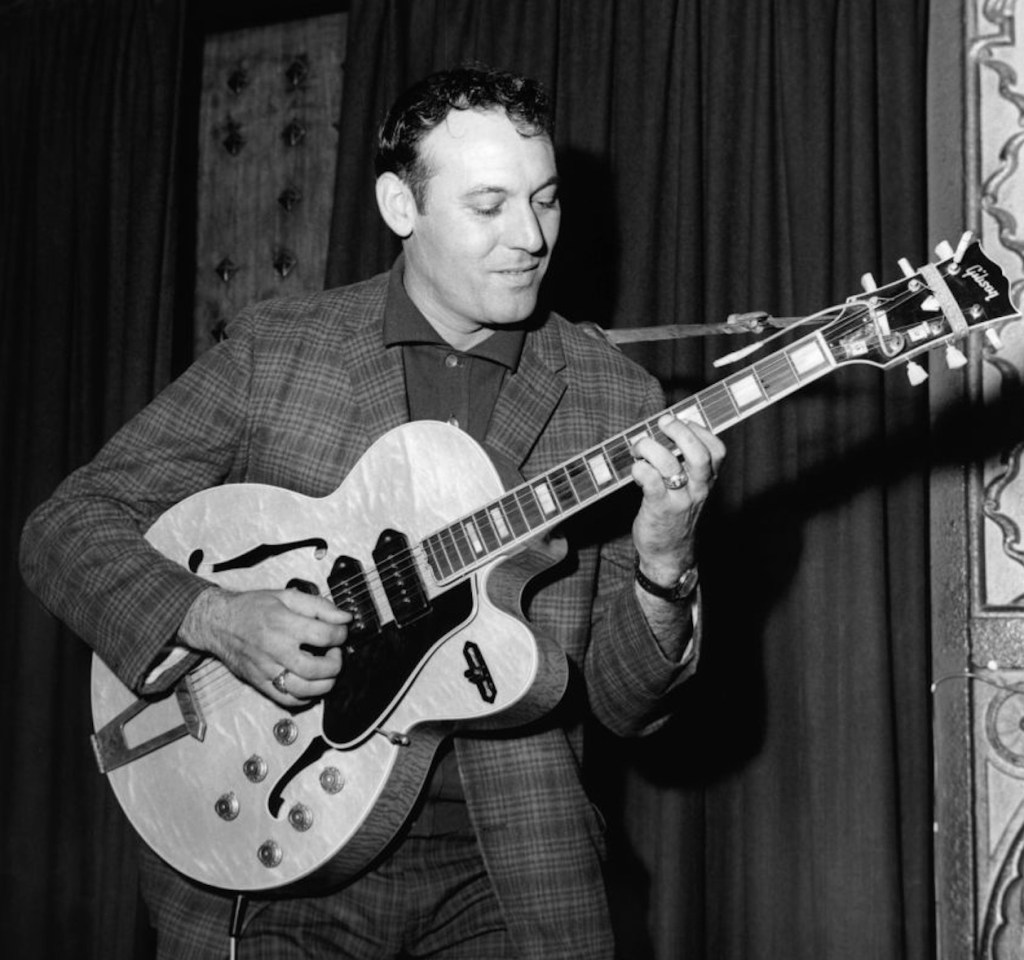
As rockabilly’s popularity faded, Perkins shifted toward country music. By 1965, he joined Johnny Cash’s touring troupe and later wrote Cash’s 1968 hit, “Daddy Sang Bass.” When Cash launched his national television show in 1969, Perkins became a regular guest while continuing to tour and record alongside him.
As a solo artist, Perkins released some country records and recorded an album with NRBQ. After Cash’s show ended, he toured as Johnny’s guitarist until 1975. He then formed the C.P. Express with his sons, Greg and Stan, and started his own label, Suede. On it, he released two albums, The Carl Perkins Show and Carl Perkins Live at Austin City Limits. In late 1978, Perkins released the rock & roll LP Ol’ Blue Suede’s Back, which sold 100,000 copies in England.
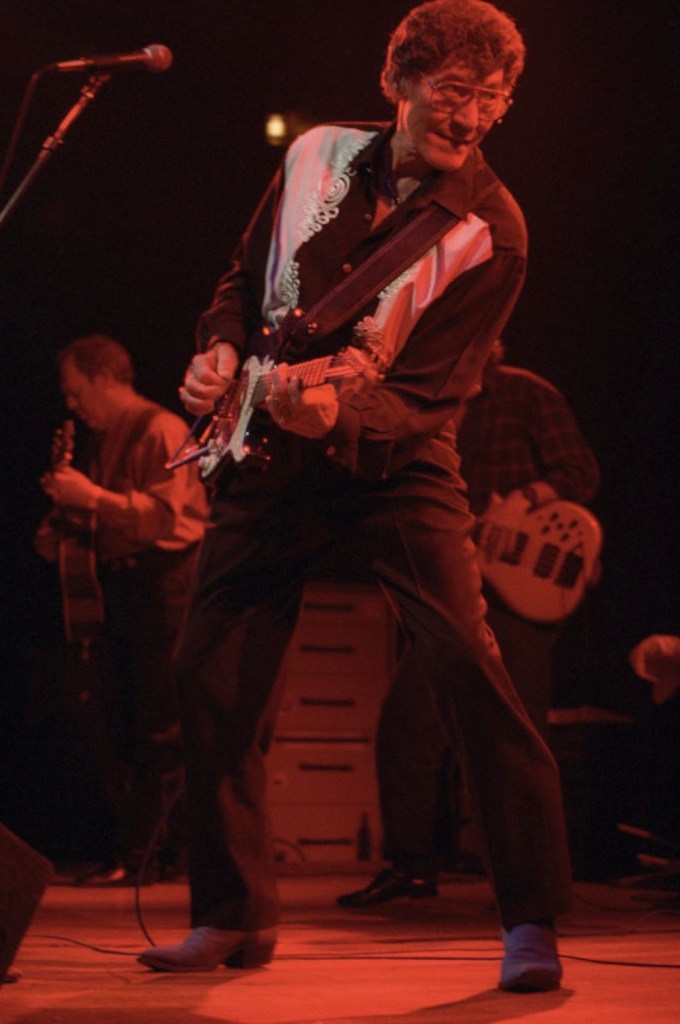
In 1981, Perkins joined the recording sessions for Paul McCartney’s Tug of War. The following year saw the release of Survivors, a live album recorded in Germany alongside Jerry Lee Lewis and Johnny Cash. In 1985, Lewis, Cash, and Roy Orbison reunited for The Class of ’55, an album that also featured guest appearances by John Fogerty and Rick Nelson.
He also co-wrote and played lead guitar on the Judds’ 1989 hit “Let Me Tell You About Love,” and Dolly Parton reached the C&W charts in 1992 with his song “Silver and Gold.”
Perkins’ final album, 1996’s Go, Cat, Go!, featured Willie Nelson, John Fogerty, Paul Simon, and Tom Petty.
He was inducted into the Rock and Roll Hall of Fame in 1987.