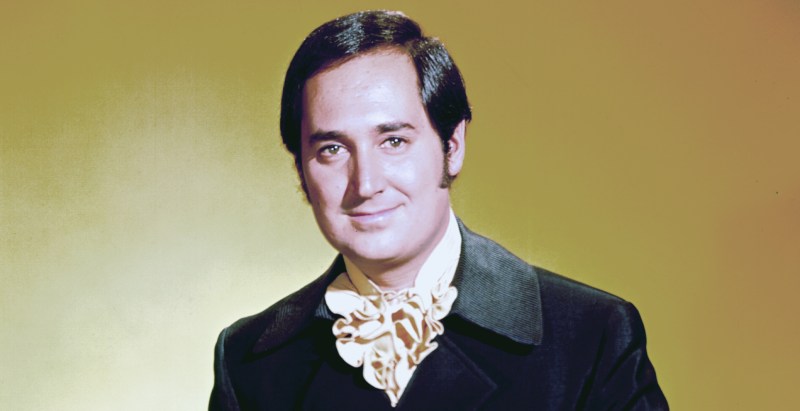
The cause of death of Neil Sedaka, the legendary pop singer and songwriter, has been revealed.
Videos by Suggest
The New York Post revealed that Sedaka died from atherosclerotic cardiovascular disease.
Sedaka died on February 27, 2026, at the age of 86 in Los Angeles after being hospitalized earlier that day for a medical emergency. The cause of death was not immediately disclosed at the time.
Weeks later, official records confirmed that Sedaka died from atherosclerotic cardiovascular disease, a condition involving the buildup of plaque in the arteries that restricts blood flow. Kidney failure was also listed as a contributing factor. These findings provided clarity surrounding what had initially been described as a sudden passing.
Sedaka’s death marked the end of a career that spanned nearly seven decades. Born in Brooklyn, New York, in 1939, he rose to prominence in the late 1950s and early 1960s as part of the Brill Building songwriting scene. He quickly became one of the era’s most recognizable voices, delivering a string of hits that defined early pop music.
Neil Sedaka Is Responsible For Over 500 Songs
Over the course of his career, Sedaka wrote or co-wrote more than 500 songs. His catalog included enduring classics such as “Oh! Carol,” “Happy Birthday Sweet Sixteen,” and “Laughter in the Rain.” He also wrote major hits for other artists, including “Love Will Keep Us Together,” which became a chart-topping success for Captain & Tennille.
Although his popularity declined during the British Invasion of the 1960s, Sedaka staged a major comeback in the 1970s. His resurgence solidified his reputation as a resilient and adaptable artist capable of evolving with changing musical trends.
Sedaka remained active well into his later years, continuing to perform and engage with fans. In the days before his death, he had shown no clear public signs of serious illness, making news of his passing all the more unexpected.
Sedaka leaves behind a lasting legacy defined by timeless melodies, prolific songwriting, and an enduring influence on generations of artists.