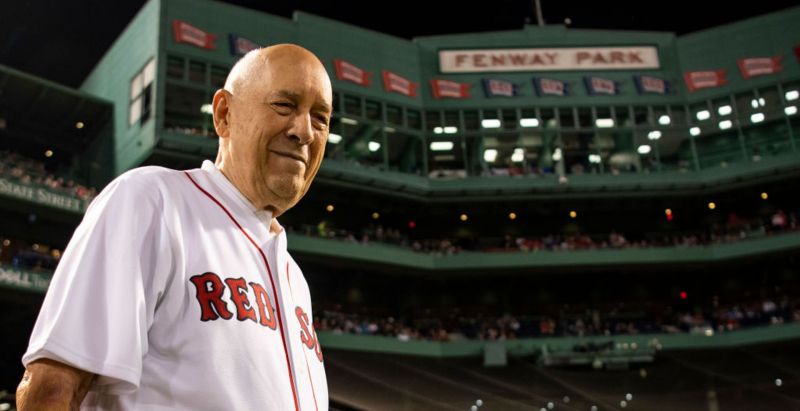
Bill Rasmussen, the sports broadcaster and entrepreneur who co-founded ESPN and helped create the modern sports television industry, died Tuesday, August 18, at his home in Florida. He was 93.
Videos by Suggest
Rasmussen died from the effects of Parkinson’s disease.
Rasmussen publicly discussed his Parkinson’s diagnosis in 2019. He used his public profile in later years to raise awareness of the disease and remained closely associated with ESPN’s founding story.
Rasmussen developed the idea for ESPN in 1978 after he lost his job with the New England Whalers of the World Hockey Association. He initially imagined a Connecticut cable channel that would carry local sports. He and his son, Scott Rasmussen, soon expanded that idea into a national network devoted entirely to sports.
Bill Rasmussen Then Founded ESPN
The Rasmussens launched ESPN on Sept. 7, 1979. The network opened with SportsCenter, which became one of its signature programs.
ESPN’s all-sports format initially faced skepticism from cable operators, but the network secured programming and investment that allowed it to expand beyond Connecticut.
Rasmussen did not remain in control of the company for long. Investors reduced his role before ESPN’s launch, and he left the company in 1980. Despite his early departure, the network continued to build on the concept he had developed and eventually became one of the most influential names in sports media.
ESPN Chairman Jimmy Pitaro made a statement praising Rasmussen. “Bill was a remarkable man,” Pitaro said, “a visionary and an innovator who conceived the idea of a network entirely devoted to sports.”
“Quite simply, none of us would be here today if it wasn’t for Bill’s passion and all the hard work and entrepreneurial spirit he put into building ESPN in the late 1970s — key aspects of our company culture that still carry on to this day.”
Rasmussen later reconnected with ESPN after years away from the company. The network honored him during its 20th anniversary in 1999 and again marked his role in its history during later anniversary celebrations. He also wrote about ESPN’s creation and continued to speak about entrepreneurship.