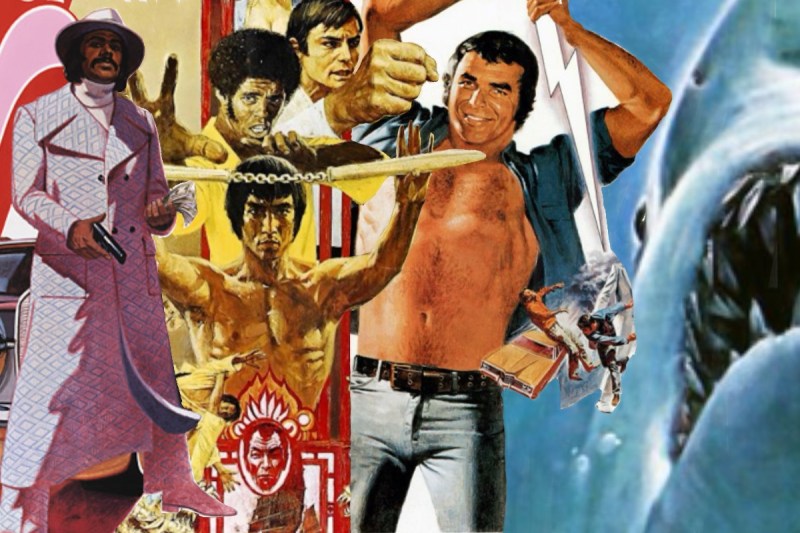
The 1970s gave us genre-defining films, grindhouse favorites, the first blockbusters, and movie masterpieces… and it also gave us some seriously badass posters.
Videos by Suggest
Posters for ’70s films still hang in college dorms and cinephiles’ home theaters across the globe, so we’re spoiled for choice. Here’s a sampling of some of our favorite, most iconic movie posters from the 1970s.
1. Super Fly (1972)
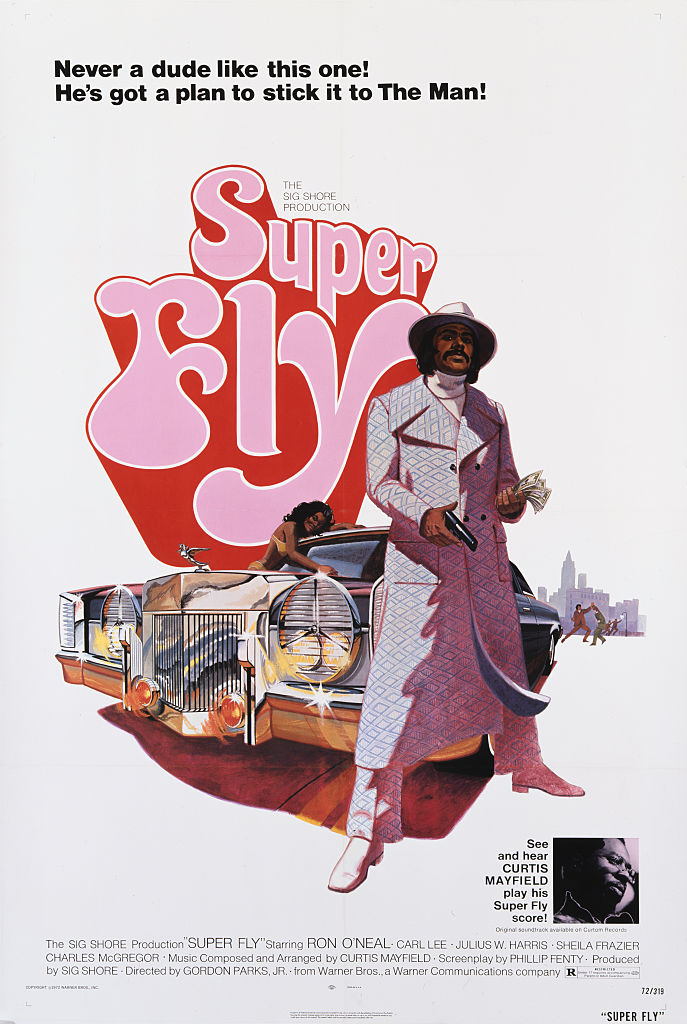
Kicking things off is a poster that perfectly encapsulates one of the top subgenres of the 1970s: blaxploitation. (Some have pointed out this is a somewhat negative label for films starring, and often made by, Black people that made serious bank). Of course, we’re talking about 1972’s Super Fly.
Ron O’Neal stars as Priest, a slick New York City drug dealer looking to get out of the game. His plan for one last big score before retirement hits a snag when he’s forced into a deal with corrupt cops. Can Priest pull off his scheme, leave the business, and stick it to The Man?
Judging by this cool as hell poster, yes. Yes, he can.
“Never a dude like this one! He’s got a plan to stick it to The Man!” reads the incredible tagline. The poster features Priest looking fly in a white trench coat, fedora, and turtleneck. He’s dual-wielding a pistol and a wad of cash, standing in front of a tricked-out Cadillac. A lovely woman leans against the car, all set against the film’s title in trippy pink letters.
It’s pure 70s, baby.
2. Enter The Dragon (1973)
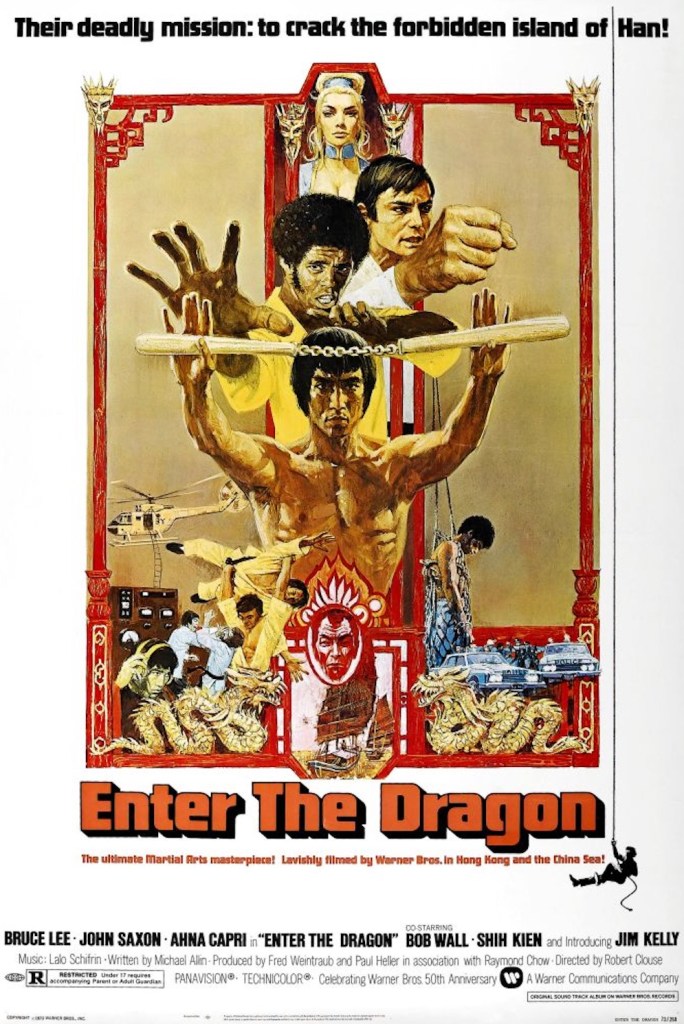
Of course, no list of cool 1970s movies would be complete without the legendary Bruce Lee. The man practically single-handedly brought martial arts to the American mainstream. Plus, movie posters don’t get much cooler than the one for his 1973 film, Enter the Dragon.
In the film, Lee portrays a martial arts master on a mission to bring down the drug lord responsible for his sister’s demise. His plan? Enter a high-stakes kung fu tournament and, with a little help from his friends, kick his way to the top of the dealer’s criminal empire.
While this poster might be the busiest one on the list, it’s a masterclass in giving the people what they want. It practically screams “1970s action flick.” Lee is front and center, brandishing nunchucks, which were a thrilling novelty at the time. He’s flanked by co-stars Jim Kelly and John Saxon, who are striking their best martial arts poses. The bottom of the poster is a chaotic collage of action: guys in karate gis mid-fight, a helicopter, and a fleet of cop cars. It’s as if the designers threw every cool thing they could think of onto one sheet, and honestly? It works.
But the real chef’s kiss, from a design standpoint, is the silhouetted figure of Lee rappelling down the length of the poster.
3. White Lightning (1973)
As blaxploitation and kung fu films took hold in grindhouse and drive-in theaters, another subgenre reared its head: hixploitation. While some would write off the genre as disparaging, depicting rural white folks as exaggerated negative stereotypes with offerings like The Texas Chainsaw Massacre and Deliverance (which both feature awesome posters, by the way), hixploitation also gave Southerners heroes to root for in an era when they were disappearing from pop culture. This was the time of the “rural purge,” when sitcoms like Mayberry, RFD, Green Acres, and The Beverly Hillbillies were swapped for more urban, liberal shows like All in the Family.
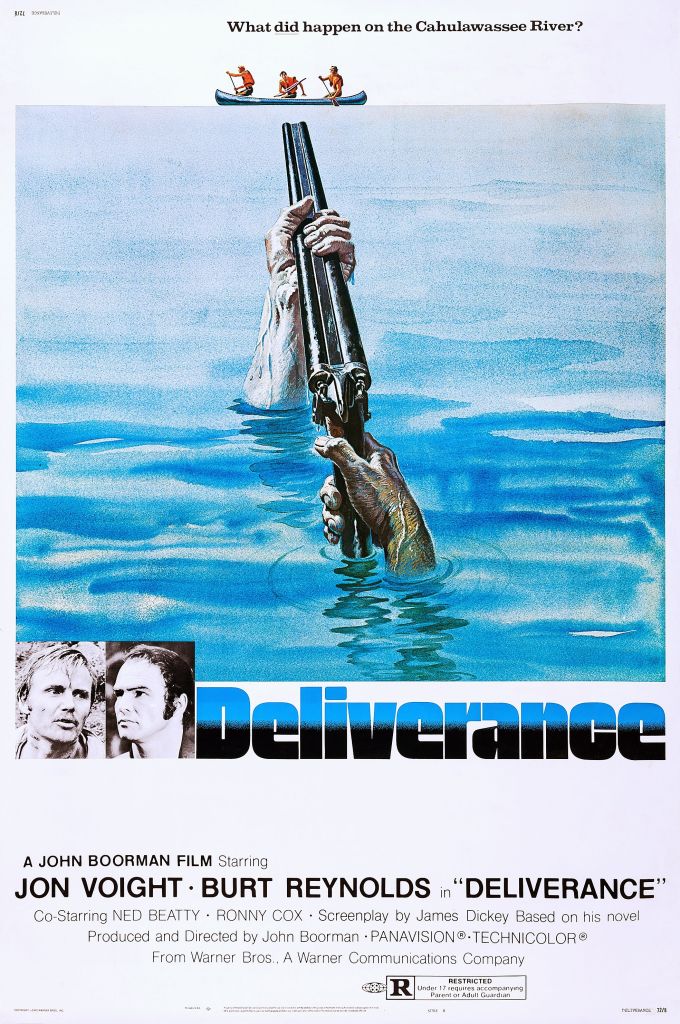
Enter the 1973 Burt Reynolds hixploitation classic, White Lightning. Reynolds plays Bobby “Gator” McKlusky, who’s cooling his heels in an Arkansas prison for running moonshine. When his younger brother is murdered by a crooked county sheriff (Ned Beatty, in a Deliverance reunion), Gator agrees to go undercover for the feds to bring him down. Seeking revenge, he dives back into the local moonshine industry, this time on the right side of the law… mostly.
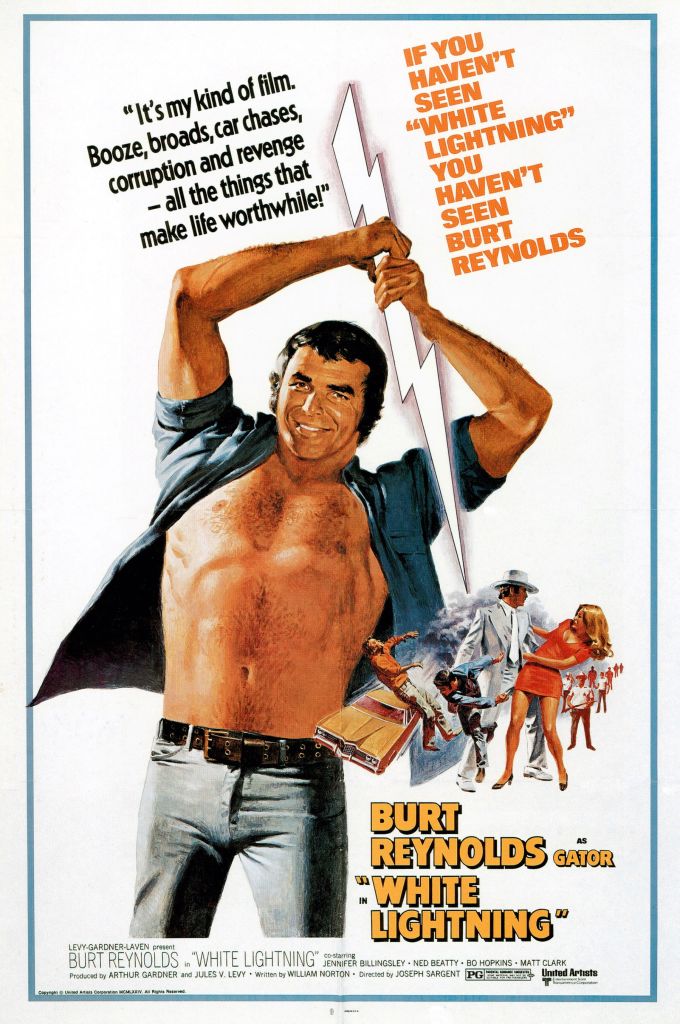
The poster, featuring the unattributed quote “It’s my kind of film. Booze, broads, car chases, corruption and revenge-all the things that make life worthwhile!”, is a masterclass in grabbing the attention of any young hellraiser.
A young, mustache-less Reynolds grins, his muscular torso on full display as he holds a cartoon lightning bolt. To his left, a small illustration shows a racing car, a cowboy-pimp figure in all-white, hassling a beautiful woman, and Reynolds himself delivering a haymaker. Needless to say, this poster put a lot of butts in seats and a whole lot of cars in the drive-in.
4. Jaws (1975)
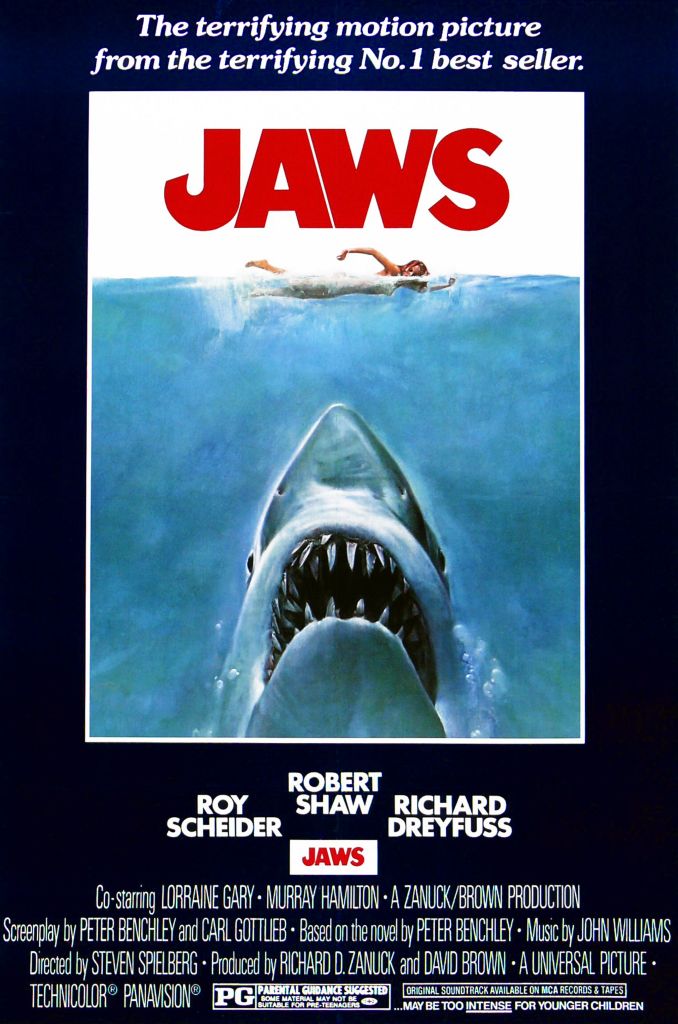
Jaws, the creature feature that made generations scared to go into the ocean. The film not only made Steven Spielberg a household name but also invented the summer blockbuster. Its plot was simple: three men go on a mission to kill a giant shark terrorizing their coastal town.
The simplicity of Jaws’ premise is captured perfectly by its poster. The blood-red title, a lone swimmer, and a massive shark lurking below… it’s an instant classic. This design flawlessly encapsulates the film’s terrifying opening and sets the tone for the entire movie.
Both the film and its advertising were so effective that they spawned an uncountable number of imitators. Take, for example, eventual Gremlins director Joe Dante’s Jaws parody, 1978’s Piranha.
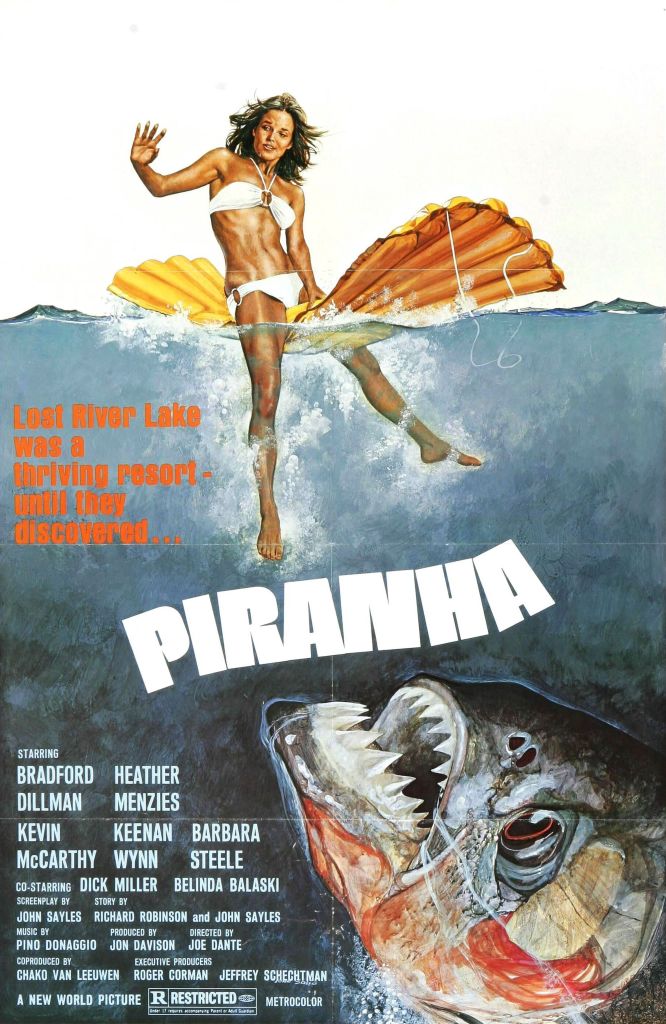
Not only did the film have fun with the basic premise of Jaws—swapping out a behemoth shark for a swarm of killer, pint-sized, man-eating fish—but the poster also cheekily parodied the classic Jaws design.
5. Halloween (1978)
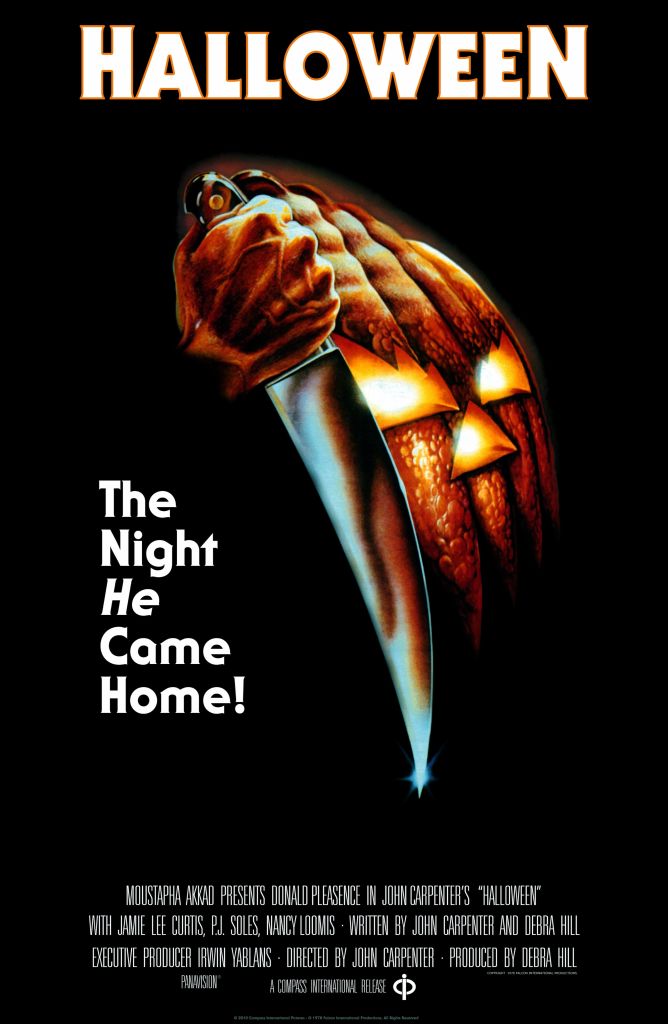
Following the killer poster for Jaws, here’s another horror classic from the 1970s with a poster that’s just as… sharp.
As if establishing the slasher subgenre, making John Carpenter a household name, and launching Jamie Lee Curtis to stardom weren’t enough, Halloween also gave us a masterclass in holiday-themed mayhem. The plot is simple: a very naughty man breaks out of a psychiatric hospital and goes on a murderous rampage.
The poster takes one of the most recognizable icons of Halloween—the humble jack-o’-lantern—and pairs it with a massive knife poised to strike. It’s got the pumpkin, the knife. and the title.
However, that’s not all…
What really sells this poster is the tagline: “The Night HE Came Home!”
Of course, in 1978, audiences didn’t know who “he” was, making the line all the more intriguing. Even now, after a slew of sequels and Michael Myers becoming a holiday icon, that tagline means something…
6. Alien (1979)
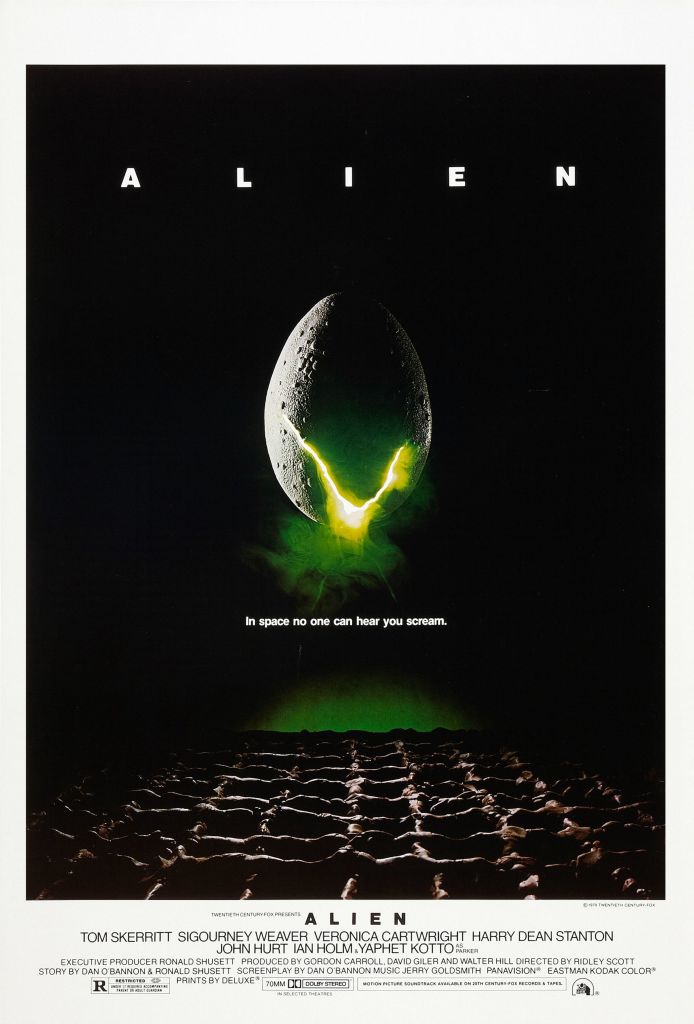
Our last stop in the 1970s also features maybe the best tagline in cinema history, a friendly reminder that: “In space no one can hear you scream.”
Indeed, any self-respecting movie fan knows we’re talking about Ridley Scott’s sci-fi horror masterpiece, Alien. Often pitched as Jaws in a spaceship, the film forever changed what a horror film could be. It follows the crew of a commercial starship who make the very poor decision to investigate a derelict space vessel, only to be hunted by the titular extraterrestrial creature.
The Xenomorph might be a pop culture icon now, but a quick glance at the original 1979 movie poster reminds us of a time when this creature wasn’t just another lovable monster. Before the sequels, crossovers, and TV shows, the Alien was truly the stuff of nightmares, capitalizing on our fear of the unknown.
The poster is a stark contrast to so many others that simply offer up portraits of stars. Instead, we get a mysterious egg against a black background, hatching with a sinister green glow. Along with the famous tagline (“In space no one can hear you scream”), the simple, one-word title also practically dares even the most fearful moviegoer to head to the theater.
From blaxploitation cool to hixploitation charm, from killer sharks to killer taglines, the movie posters of the 1970s weren’t just advertisements… they were art. These iconic images captured the bold, gritty, and groundbreaking spirit of the decade’s films, proving that sometimes, you really can judge a movie by its cover.