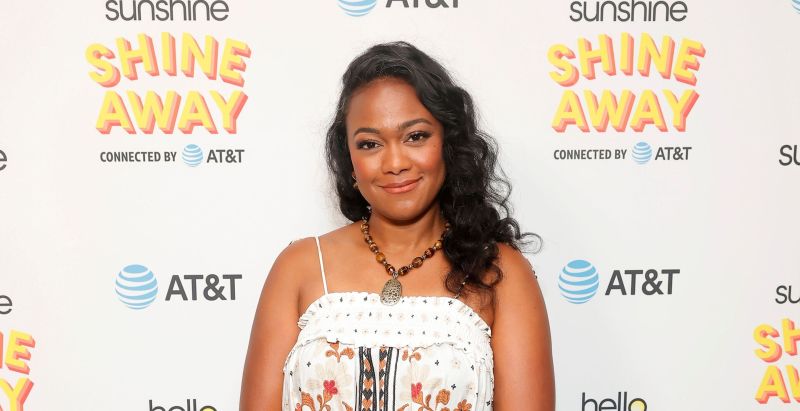
Actress Tatyana Ali is speaking publicly about the traumatic birth of her first child, recalling what she described as dangerous treatment during labor that left both her and her son in distress.
Videos by Suggest
Ali, best known for her role on the television sitcom The Fresh Prince of Bel-Air, discussed the experience during an appearance on the Pod Meets World Podcast. The actress said her pregnancy with her son Edward had been healthy until she arrived at the hospital in 2016.
She explained that hospital staff did not follow her birth plan and physically restrained her during labor. Ali described the experience as “obstetric violence.”
Tatyana Ali Was Held Down During Her Labor
“Our birth plan wasn’t followed… I was also held down, my arms and legs,” she said.
The actress said medical staff performed a maneuver that forced her baby back inside her body while he was crowning. “They pushed him back inside me,” Ali said during the podcast interview. She added that the move was “not a real procedure” and called it “incredibly dangerous.”
Per the Mayo Clinic, pushing a baby back into the womb is a procedure called the Zavanelli maneuver. It is only used in critical cases to prepare for emergency C-sections.
Although Ali wanted a natural birth, the nurses performed an emergency C-section.
Ali said her medical records showed that her baby moved from the “lowest station” to the “highest station” during labor without documentation explaining how it happened. She said she feared the maneuver could have seriously injured her son in the process.
After the delivery, Edward spent several days in the neonatal intensive care unit because he could not urinate on his own for “about five or six days.” She said a pediatric urologist later told her that the traumatic birth may have contributed to the complications.
Ali and her husband, Vaughn Rasberry, eventually left the hospital in the middle of the night after doctors discharged their son. The couple later welcomed a second son, Alejandro, in 2019.
Since the experience, Ali has become an advocate for maternal health awareness and reproductive justice. She said Black women and Indigenous women often face unequal treatment during childbirth. She pointed to statistics showing Black women experience significantly higher maternal mortality rates in the United States.