
A fire broke out at a Bangkok music bar earlier this week, killing over 30 people and injuring dozens more before firefighters were able to extinguish the blaze.
Videos by Suggest
The July 13 fire killed at least 33 people and injured dozens more. Meanwhile, 27 victims are still hospitalized, according to the Associated Press. Officials confirmed that most deaths were caused by smoke inhalation, while a small number died from burn injuries.
Bangkok is known for its bustling nightlife, with bars and clubs scattered throughout the city. But gaps in the country’s licensing system have allowed many venues to operate outside of regulations that reflect their actual activities, the AP points out.
The bar claimed on social media to have a capacity of around 600 people. However, it is unclear how many were present that night. Authorities are still investigating what sparked the fire at Rong Beer Na Ladprao bar in northern Bangkok and why it resulted in so many casualties.
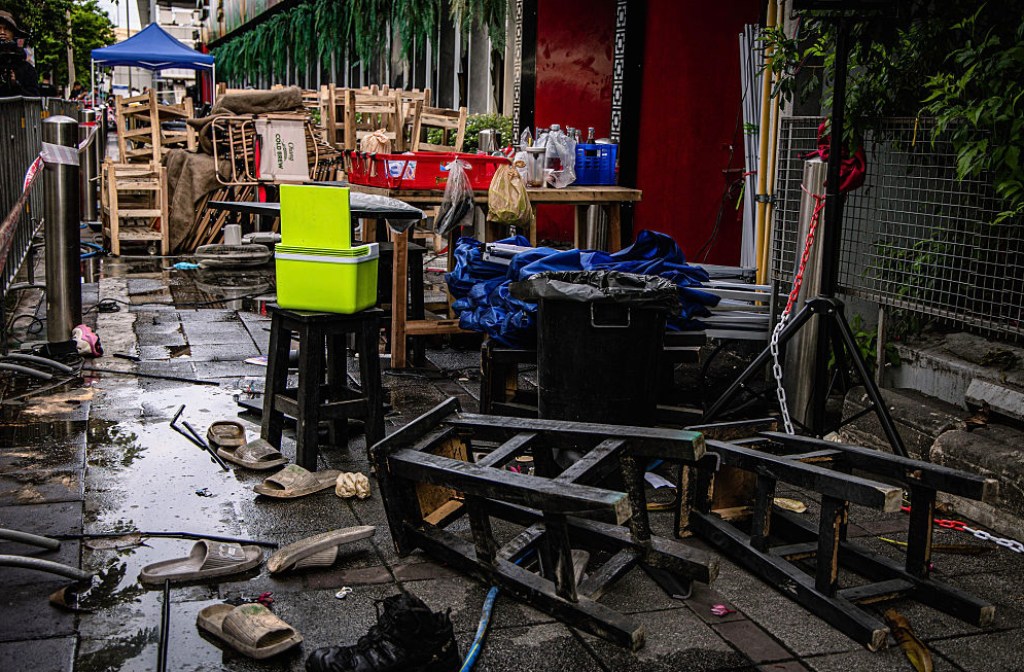
Amorn Pimanmas, president of the Thailand Structural Engineers Association, pointed to overcrowding, combustible materials, and blocked exits as possible causes, a view shared by fire safety and engineering experts. “If proper engineering principles and all relevant laws and regulations had been strictly followed,” Amorn said, the tragedy could have been prevented.
Thailand’s Safety Loopholes May Have Contributed to Deadly Fire at Music Bar
Thailand’s nightlife venues are primarily regulated by the Entertainment Place Act, enacted in 1966 and updated in 2012, three years after a fire on New Year’s Eve 2009 killed 67 people and injured more than 200 at the Santika nightclub. The revised law requires fire-resistant interior materials, smoke ventilation systems, sprinklers, and appropriately sized fire escape routes.
Many Bangkok bars and clubs operate outside designated entertainment zones. This means they can’t obtain proper licensing even if they meet safety standards. Instead, they register as restaurants with alcohol and live music licenses — which have less stringent safety requirements. Opposition lawmaker Paramait Vithayaruksun has called the Entertainment Place Act “outdated and unrealistic.” He points to a legal gap that allows many venues to operate under looser safety rules.
The Na Ladprao bar was registered as a restaurant with live music rather than as an entertainment venue. This is largely because it was located outside Bangkok’s entertainment zones. This distinction has significant consequences. Thailand’s zoning laws, which apply to 55 provinces, prevent many venues from obtaining proper entertainment licenses, particularly in the 22 provinces that do not issue them at all. According to opposition lawmaker Paramait Vithayaruksun, this allows businesses to sidestep stricter safety standards and face lighter legal penalties.
Prime Minister Anutin Charnvirakul acknowledged these shortcomings this week, calling for a review of the law.
“Times have changed. I’ve asked officials to study how we should adjust the rules,” Charnvirakul said. “We need to look at it from every angle. What society is like today, as well as our culture, customs, and traditions.”