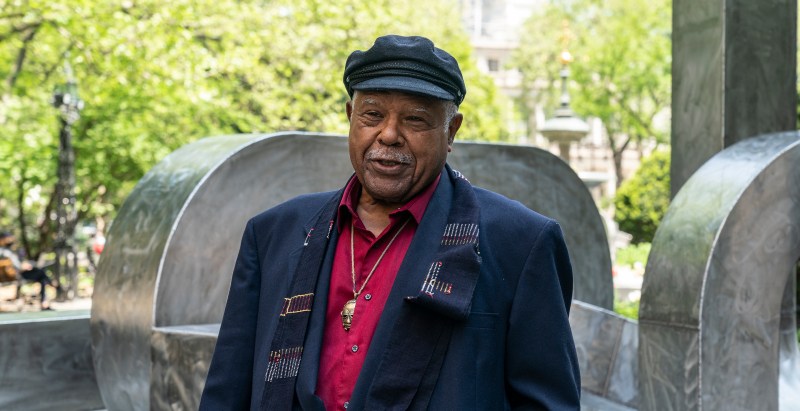
Melvin Edwards, the pioneering American sculptor whose welded steel works explored histories of race, violence, and resistance, has died at the age of 88.
Videos by Suggest
He died peacefully at his home in Baltimore on 30 March 2026, according to reports.
Edwards built a distinctive artistic language using industrial materials such as barbed wire, chains, and scrap metal. He used these elements to confront the social and political upheavals of the civil rights era. Themes of protest, the African diaspora, and racial injustice inspired his work.
Born in Houston, Texas, in 1937, Edwards grew up during racial segregation and later moved to Los Angeles to study at the University of Southern California. Although he initially trained as a painter, he began experimenting with welding in 1959, a turning point that shaped his career.
His early breakthrough came in 1965 with a solo exhibition at the Santa Barbara Museum of Art.
Most Knew Melvin Edwards For His Lynch Fragments Series
Melvin Edwards gained international recognition for his ongoing series Lynch Fragments (1963–2026), small wall-mounted sculptures made from found metal objects, including chains, hammers, and railroad spikes. These tightly composed works responded directly to racial violence in the United States and later expanded to address issues such as the Vietnam War and global struggles for liberation.
Across decades, Edwards continued to refine his approach to abstraction while maintaining a strong political voice. Critics often noted how his pieces evoked brutality and resilience simultaneously.
Edwards also achieved historic milestones within the art world. He became the first African American sculptor to receive a solo exhibition at the Whitney Museum of American Art in 1970, marking a significant moment in the recognition of Black artists in major institutions.
In later years, his work received renewed attention through major exhibitions in Europe and the United States, highlighting his lasting influence on contemporary sculpture.
Edwards leaves behind a body of work that reshaped how artists engage with materials and history. His sculptures, forged from steel and memory, remain enduring testimonies to struggle.